Burley Park Station
Opened 1988
Burley Park Station: John Melbourne
Royal Gardens station existed on the site of the
current Burley Park station & closed in 1858.
The new Burley Park
station was opened by British Rail on 25 November 1988.
There was once a
Zoo in Leeds centred on Cardigan Road in Headingley. I think it was
bounded by Chapel Road on the west and at the southern end where
Chapel Road bends back toward Cardigan Road, which is adjacent to
Burley Park Station. It opened in 1840 and closed in 1858. There are
several remains including the Bear Pit on Cardigan Road itself and
Walls in places where the perimeter lay. I was told on a walking
tour that the walls at the south Chapel Road end dated from the zoo.
Now this presents an intriguing possibility. We know Burley had a
Goods yard a few hundred yards from Burley Park Station closer to
Leeds and also that the Zoo's existence overlapped the early years
of the line. The following link suggests that there was indeed a
station at the current site of Burley Park Station: https://en.wikipedia.org/wiki/Leeds_Zoological_and_Botanical_Gardens
|
Headingley station
/Headingley_small.jpg) Opened 1849. Opened 1849.
Headingley station map (1850) : Malcolm Mallison
Plans of station taken from 1850 6 inch to the
mile map. |
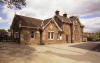 Headingley
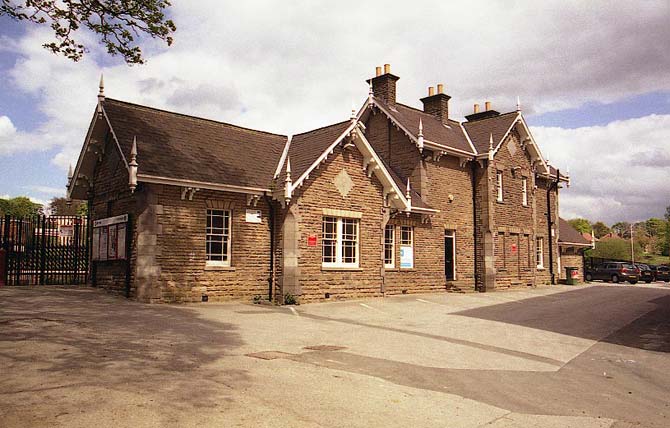
station facing north (02-05-05) : David Webdale Headingley
station facing north (02-05-05) : David Webdale
Built around 1849 for the Leeds & Thirsk
railway, the station was originally called Headingley and Kirkstall.
The station buildings are still intact & well kept in 2005. Don't
know when they stopped being used as station buildings. |
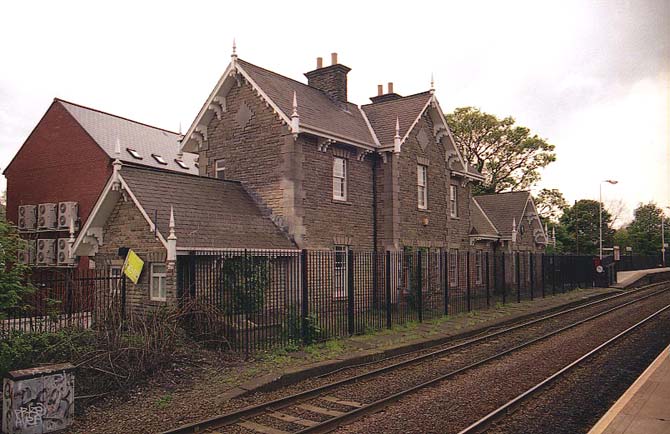
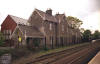 Headingley
station facing south (02-05-05) : David Webdale Headingley
station facing south (02-05-05) : David Webdale
Trackside showing original low level platform &
some serious fencing. |
Headingley station memories : Mike Scargill
We went to live in Headingley Mount in 1950. It
was a station then, because I can remember getting tickets at the ticket
office. It probably closed around 1955 or so. There was a working goods
yard & shed. Wagons to be unloaded were delivered & pushed up an
inclined siding, which backed onto the tunnel under Kirkstall Lane.
There was a stone goods shed & hand crane. The yard used the 3 wheel
mechanical horse for deliveries.
The station was sold & used as offices for a firm for many years & they
looked after it well, which will account for its condition now.
The goods yard was let out & a glass firm was in the shed for many
years. I used to buy glass there. They were one of the few places that
understood & sold flashed opal glass. The rest of the land was slowly
sold & built on, until it is as seen now. There was also the inevitable
coal merchant, in the days when you could leave coal out, & it would
still be there in the morning. (probably with an Alsatian dog as well)
You crossed under the line to get to the Leeds platform. There was an
unmanned level crossing towards the Harrogate side, now an underpass,
which was built because someone tried to cross in a car when a train was
coming & got hit.
There was still a club in the fields to cross the line for, Queenswood
club today. When DMUs were introduced, to replace steam services, the
drivers found they could play tunes with the horns. I know they were
told to stop doing so, after complaints. One used to play Come to the
cookhouse door.
We came from Cardigan road, where my grandfather ran the Hargreaves coal
yard there. (Its a builders yard now) He was Hargreaves first employee,
when the firm was started. Probably about 1900. He had worked at the
Midland goods yard, now crown point in Hunslet until then.
We used to check our mantel clock by the Harrogate Pullman 1545? It was
normally drawn by an A4, so the chime whistle was obvious.
I vividly remember at night, listening to overloaded goods, slipping all
the way up the banking, at the end of the war period, before they could
get a footing. Hope this hasn't rambled too much. |
Headingley station memories : Stuart Roche
With reference to mike Scargills article, I lived
in park mount which had the level crossing at the top, it remained
manned up to the installation of the underpass at around 1966. I
remember staying up all night watching the work, into fact I slipped out
into the wee small hours for a closer look, I was about 13, the station
was still manned at that time as it was my main source of transport into
Leeds, it was along walk round to our house so I used to run up the side
of the track as a short cut. My sisters and I used to shelter into the
box of mum wasn't at home after school, real railway children. |
Headingley station memories : Andy Snowdon
Regarding Mike Scargill’s article, I lived near to
Headingley station from mid sixties. My best mate and myself were train
mad, and we spent a lot of time on the station when it was manned, and
we often used the train for local trips. It was a different experience
then. You bought a ticket from the booking office window, which was
validated by a double clunk from the machine. In winter there was a coal
fire going, the place had a distinct smell. One of the station staff let
us light the gas lights at dusk, it allowed him to push off a bit early!
In its heyday it must have been busy, with several sidings, including
coal drops and a siding where the circus train offloaded animals for the
procession to Woodhouse Moor. You can still see the gate at end of
siding through which they came, on the allotment side of tracks next to
underpass.
I remember several steam trains coming through, one which we called the
12 o’clock steamer. The London trains were by then mainly Deltic hauled,
and they were a fine sight and sound coming out of tunnel droning up the
grade. Prior to moving to Becketts Park we lived in Burley, and I
remember many trains were steam. The DMU’s on locals of course. I
remember the first class 40’s infiltrating, and the prototype Deltic
appeared sometimes. I used to watch shunting operations from the
footbridge at the Cardigan Road yard.
When they built the underpass to replace the level crossing at
Headingley we followed progress closely, and even managed to blag our
way into the cab of the 37 on the works train.
There was only one job for both of us, and we both started on the
footplate in 1971, moving to Old Oak Common depot in London to do so. We
both returned to Holbeck, then moved on again. My mate is retired, but I
am in my 50th year, working for GWR in Devon.
I remember those carefree days with fondness, and still use a much
changed station on trips to visit family. |
Horsforth
/Horsforth_small.jpg) Station
map (1850) : Malcolm Mallison Station
map (1850) : Malcolm Mallison
Plans of station taken from 1850 6 inch to the mile map. |
Bramhope tunnel
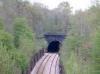 Bramhope
tunnel south portal (22-03-06) Nigel Callaghan Bramhope
tunnel south portal (22-03-06) Nigel Callaghan
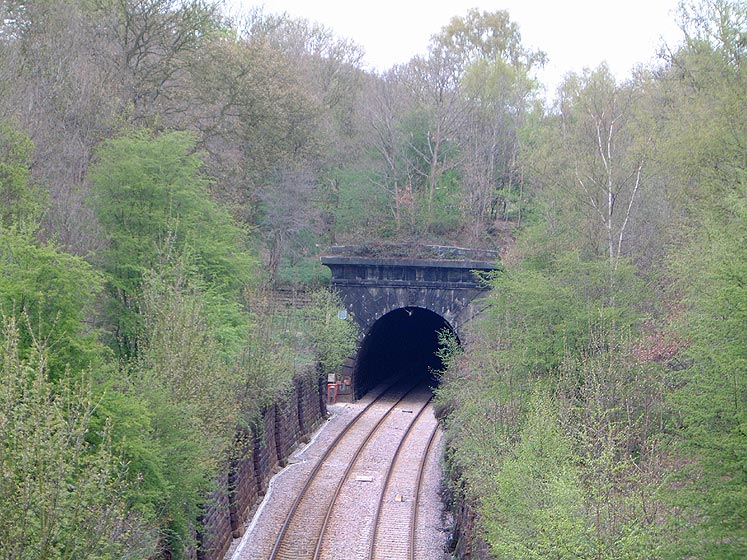
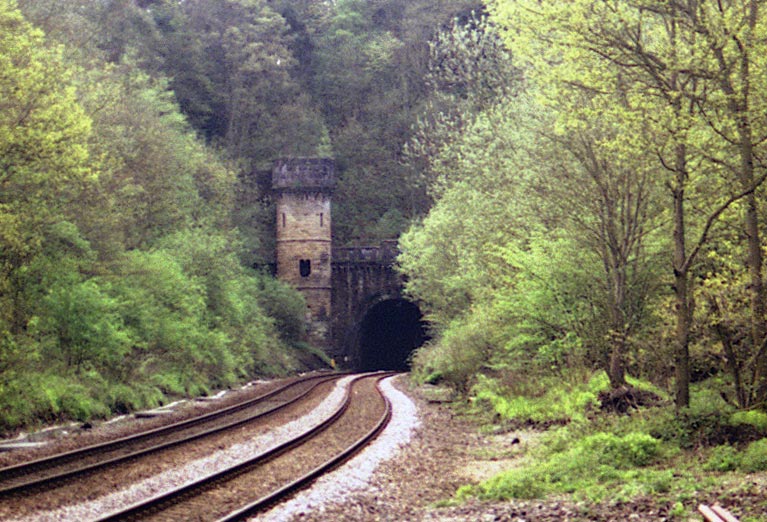
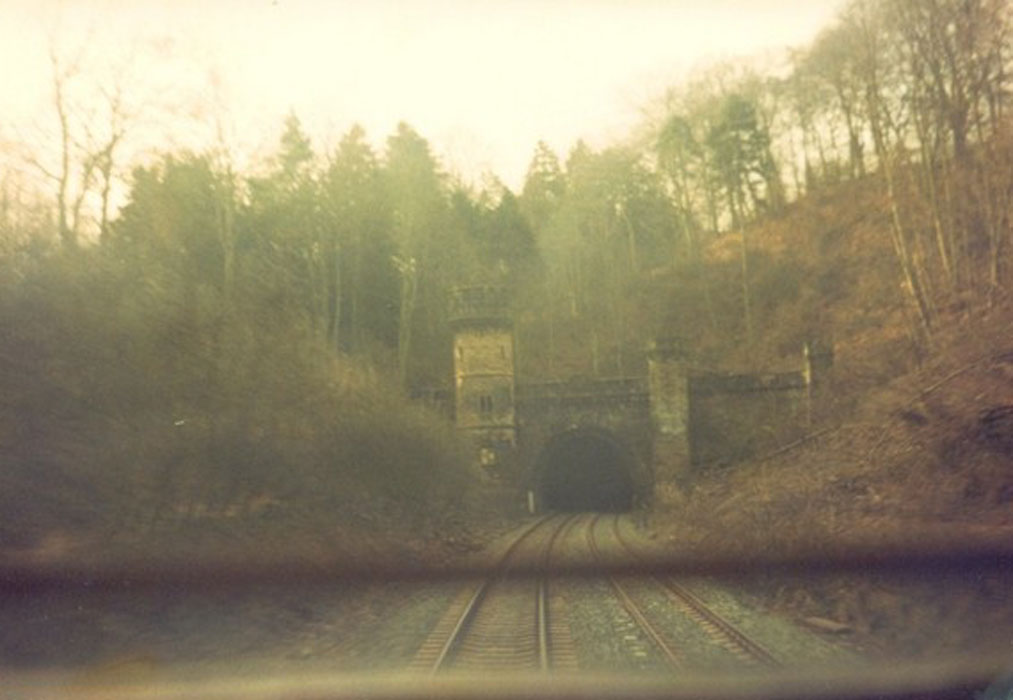
The south portal of Bramhope Tunnel. The one your
rarely see, and much harder to find and reach.
The tunnel, constructed between 1845-1849, two miles in
length.
The labour force consisted of 2300 men. |
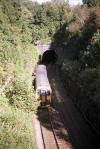 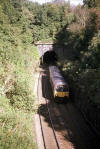 Bramhope
tunnel south portal (24-11-12) Malcolm Mallison Bramhope
tunnel south portal (24-11-12) Malcolm Mallison
Bramhope tunnel south portal. Despite Sunday timetable,
two trains within 10 minutes of arrival at footbridge over line. |
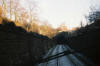 Bramhope
tunnel south portal (c1980) : Philip Hardaker Bramhope
tunnel south portal (c1980) : Philip Hardaker
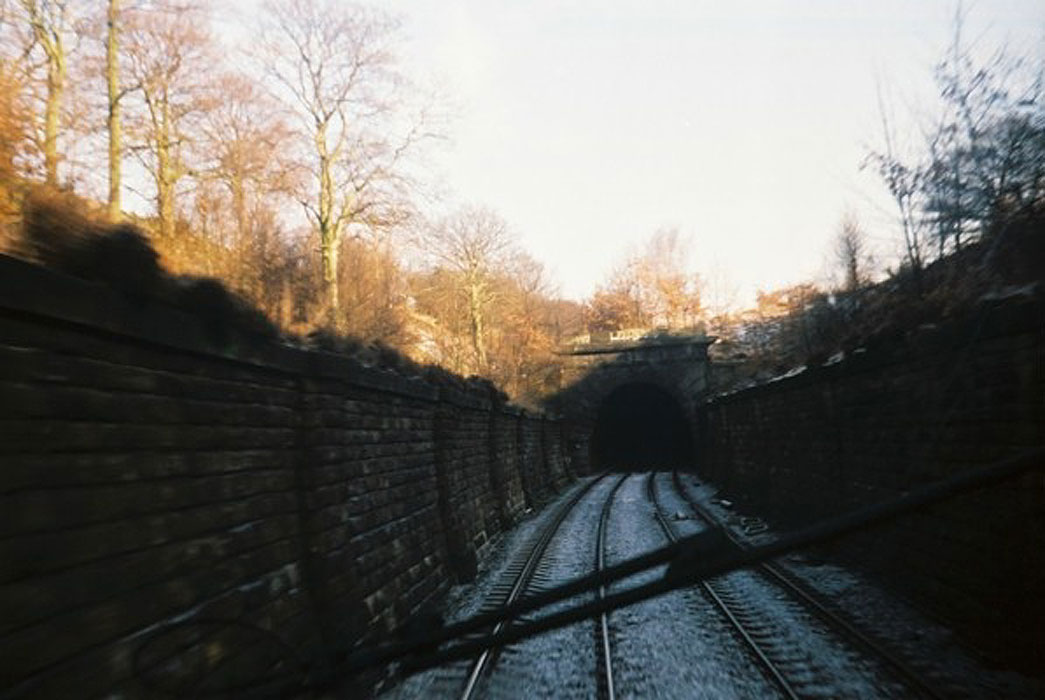
Horsforth entrance to the tunnel, we had a job where the
London HST started in Harrogate in the 1980s. |
Bramhope tunnel air shaft (24-11-12) Malcolm Mallison
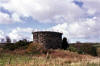 “Air
shaft” according to OS map- originally construction shafts. I’m always
amazed by the accuracy of surveying that allowed this- in my world four
shafts would have resulted in anything up to ten tunnels. A check on
that fount of all wisdom, Wikipedia, tells that there were originally 20
shafts- hopefully backfilled after completion. There are large sections
of ground above the line of the tunnel are covered in what appears to be
spoil from tunnelling. Grid ref 242418. “Air
shaft” according to OS map- originally construction shafts. I’m always
amazed by the accuracy of surveying that allowed this- in my world four
shafts would have resulted in anything up to ten tunnels. A check on
that fount of all wisdom, Wikipedia, tells that there were originally 20
shafts- hopefully backfilled after completion. There are large sections
of ground above the line of the tunnel are covered in what appears to be
spoil from tunnelling. Grid ref 242418. |
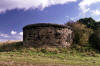 Bramhope
tunnel air shaft (24-11-12) Malcolm Mallison Bramhope
tunnel air shaft (24-11-12) Malcolm Mallison
Grid ref 245423 |
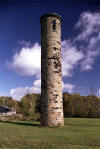 Bramhope
tunnel sighting tower (24-11-12) Malcolm Mallison Bramhope
tunnel sighting tower (24-11-12) Malcolm Mallison
Grade 2 listed sighting tower, at junction of Moor Rd &
Moorland Rd. Surprising no-one nicked all that lovely cut stone once the
navvies had gone. |
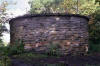 Bramhope
tunnel air shaft (24-11-12) Malcolm Mallison Bramhope
tunnel air shaft (24-11-12) Malcolm Mallison
Back to air shafts. 249427. |
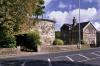 Bramhope
tunnel air shaft (24-11-12) Malcolm Mallison Bramhope
tunnel air shaft (24-11-12) Malcolm Mallison
And finally next to A660. |
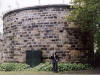 Bramhope
tunnel north portal 31-05-06 : John Ferguson & Layla Smith Bramhope
tunnel north portal 31-05-06 : John Ferguson & Layla Smith
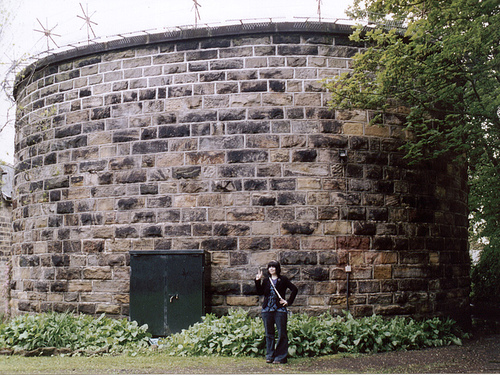
The northernmost ventilation shaft, in the grounds
of the scout hut just off the A660 in Bramhope,
and Layla, providing us with a sense of scale. |
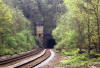 Bramhope
tunnel north portal (01-05-05) : David Webdale Bramhope
tunnel north portal (01-05-05) : David Webdale
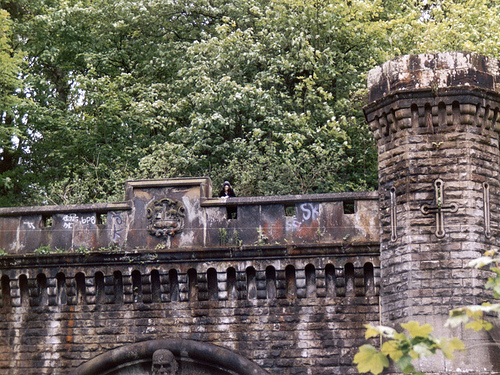
The railway ran through
the estates of some local gent called William Rhodes.
Apparently this
portal was made to look like a garden building to keep the old guy
quiet. |
 Bramhope
tunnel south portal (c1980) : Philip Hardaker Bramhope
tunnel south portal (c1980) : Philip Hardaker
Bramhope entrance to the tunnel, we had a job where the
London HST started in Harrogate in the 1980s. |
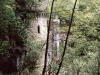 Bramhope tunnel north portal
(31-05-06) :
John Ferguson & Layla Smith
Website -
www.flickr.com/photos/32763322@N00 Bramhope tunnel north portal
(31-05-06) :
John Ferguson & Layla Smith
Website -
www.flickr.com/photos/32763322@N00
First glimpse! We took a treacherous route down
the short steep embankment
to the level of the top of the portal,
and Layla slid down on her bum.
We later found a shallower and less muddy route five yards to the left. |
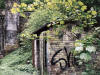 Bramhope
tunnel north portal (31-05-06) : John Ferguson & Layla Smith Bramhope
tunnel north portal (31-05-06) : John Ferguson & Layla Smith
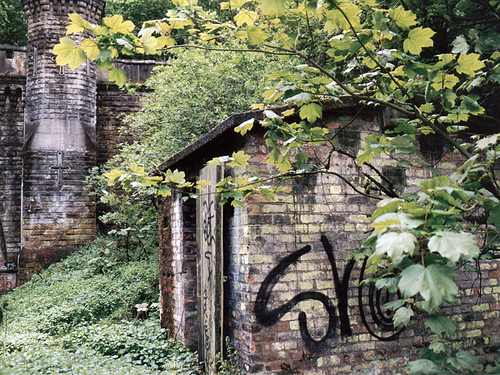
I arrived down the embankment behind this shed,
which seemed to contain some plastic bags and a few rolls of plastic
piping. There is a good wide and fairly stable area of ballast to the
side of the track, to keep a safe distance, but it's covered in nettles. |
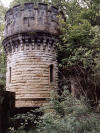 Bramhope
tunnel north portal (31-05-06) : John Ferguson & Layla Smith Bramhope
tunnel north portal (31-05-06) : John Ferguson & Layla Smith
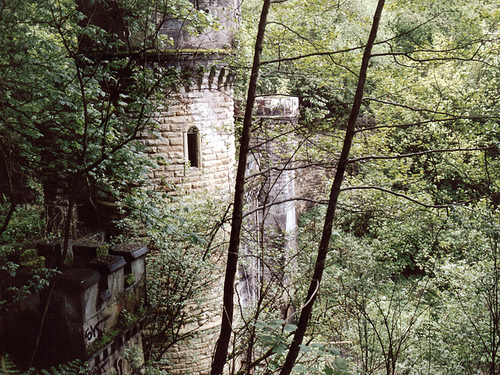
The larger eastern tower from the top of the
portal. The inside of this tower has a number of stories of rooms which
once provided accomodation for some workers during the original
construction. We suspect this meant a handful of designers, foremen and
artisans, rather than the 2500 navvies on site. The interior of the
tower is accessible since vandals have broken down the breezeblocks that
previously blocked the entrance. We didn't dare go in as there were only
two of us and some of the stonework looked a little dilapidated, but a
week later a group of us went down and found that the inside seems
reasonably sound, although the steps are steep and dark and covered in
junk. |
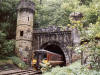 Bramhope
tunnel north portal (31-05-06) : John Ferguson & Layla Smith Bramhope
tunnel north portal (31-05-06) : John Ferguson & Layla Smith
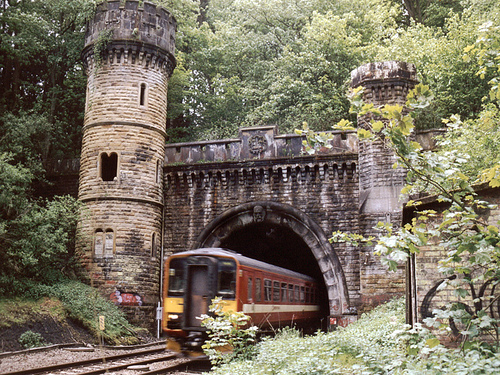
Woo! waited about 15 minutes to get this shot of a
DMU leaving the tunnel for York. |
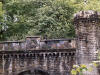 Bramhope
tunnel north portal (31-05-06) : John Ferguson & Layla Smith Bramhope
tunnel north portal (31-05-06) : John Ferguson & Layla Smith
View of the top of the crenelations. A Leeds coat
of arms is situated above the tunnel, |
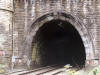 Bramhope
tunnel north portal (31-05-06) : John Ferguson & Layla Smith Bramhope
tunnel north portal (31-05-06) : John Ferguson & Layla Smith
and a slightly weird head peers off the keystone. |
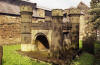 Otley
church yard Bramhope tunnel monument (01-05-05) : David Webdale Otley
church yard Bramhope tunnel monument (01-05-05) : David Webdale
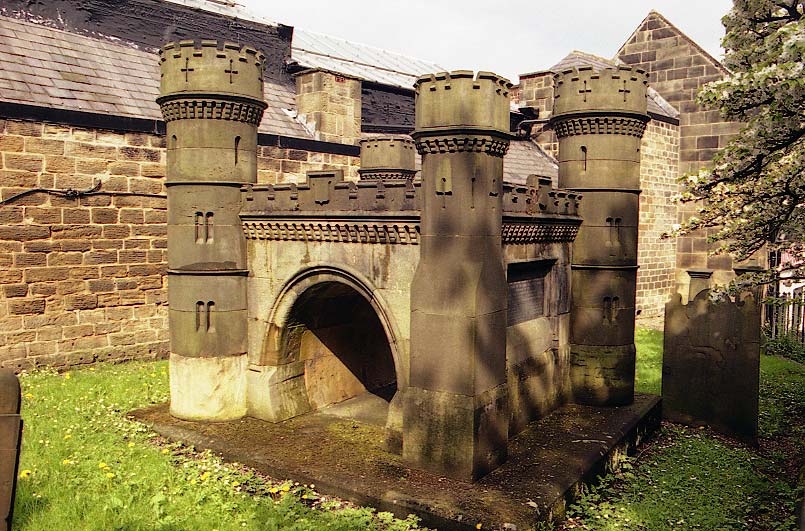
Monument to the 23 people killed during the
construction of the nearby Bramhope tunnel.
Made to look like the north portal, the monument was rebuilt using local stone back in 1913. |
Arthington station
Opened 1849. Closed 20-03-1965.
See
also Arthington to Otley section
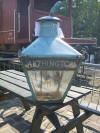 Arthington
sign (23-07-08) : Paul Holroyd
website - www.vintagecarriagestrust.org Arthington
sign (23-07-08) : Paul Holroyd
website - www.vintagecarriagestrust.org
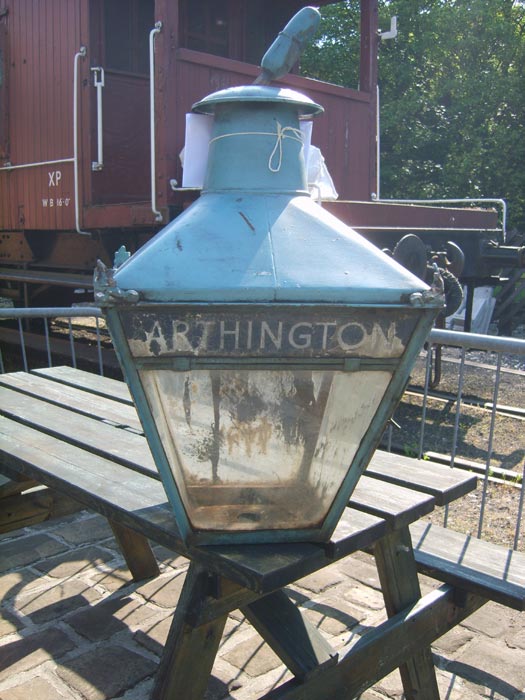
Until Arthington closed on
20th March 1965, it was the junction for Pool in Wharfedale and Otley,
as well as the surviving line to Harrogate, Knaresborough and York.
This
running in board from Arthington is displayed in the cafeteria of Bolton
Abbey station, on the preserved Embsay & Bolton Abbey Railway. |
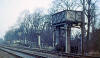 Arthington
Station (01-1972) : Keith Rose Arthington
Station (01-1972) : Keith Rose
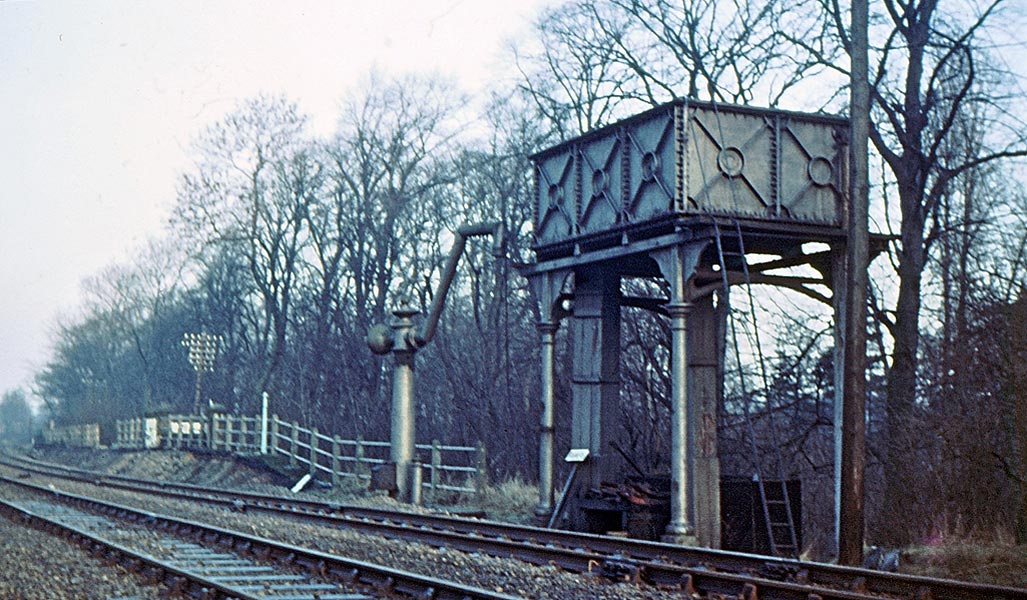
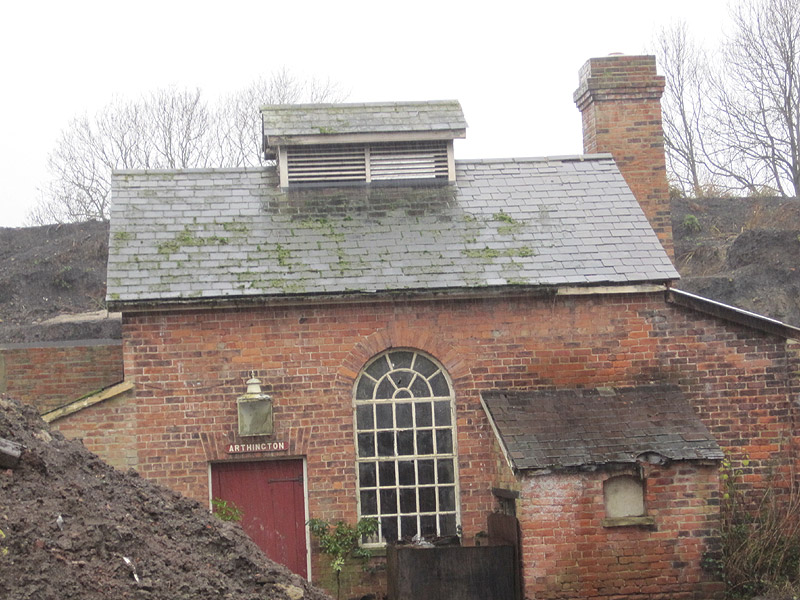
Arthington Station, Up Leeds Platform, NER pattern Water
Column (arm altered for high sided tenders) and tank, January 1972.
The water supply was from Bramhope Tunnel, which also served some
cottages. |
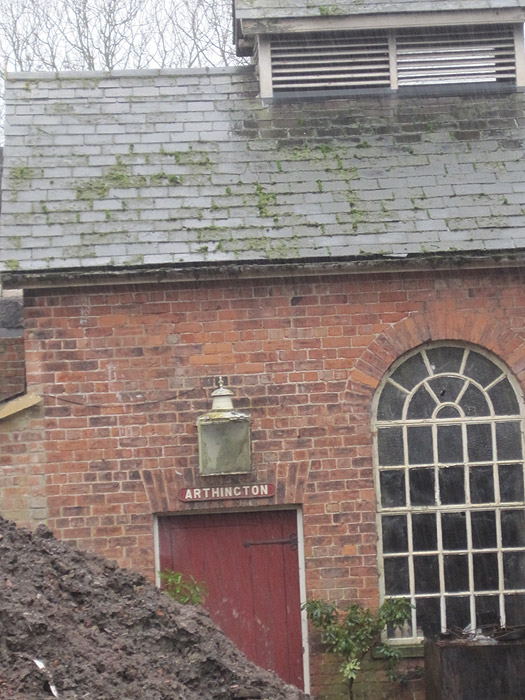
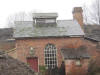 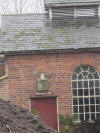 Arthington
gas works building (01-01-12) : Adrian Smith Arthington
gas works building (01-01-12) : Adrian Smith
Arthington gas works building, 1st January 2012, near
Creskeld Hall. Situated within the triangular junction
for Pool in Wharfedale & Otley.
Arthington Gas Works opened in 1876 to supply Arthington and Pool
stations. |
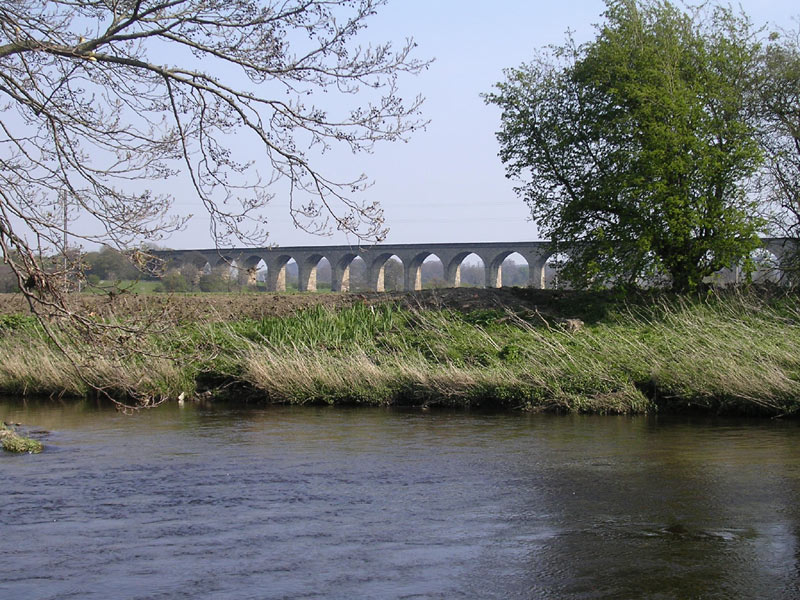
Arthington Viaduct
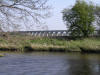 Arthington
Viaduct (17-10-09) : David Taylor Arthington
Viaduct (17-10-09) : David Taylor
Not lost or closed but can't have a piece on this line without a photo
of the 21 arch Arthington Viaduct over the Wharfe. |
Crimple Viaduct
See also Church Fenton -
Harrogate
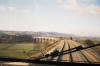 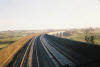 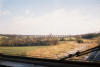 Crimple
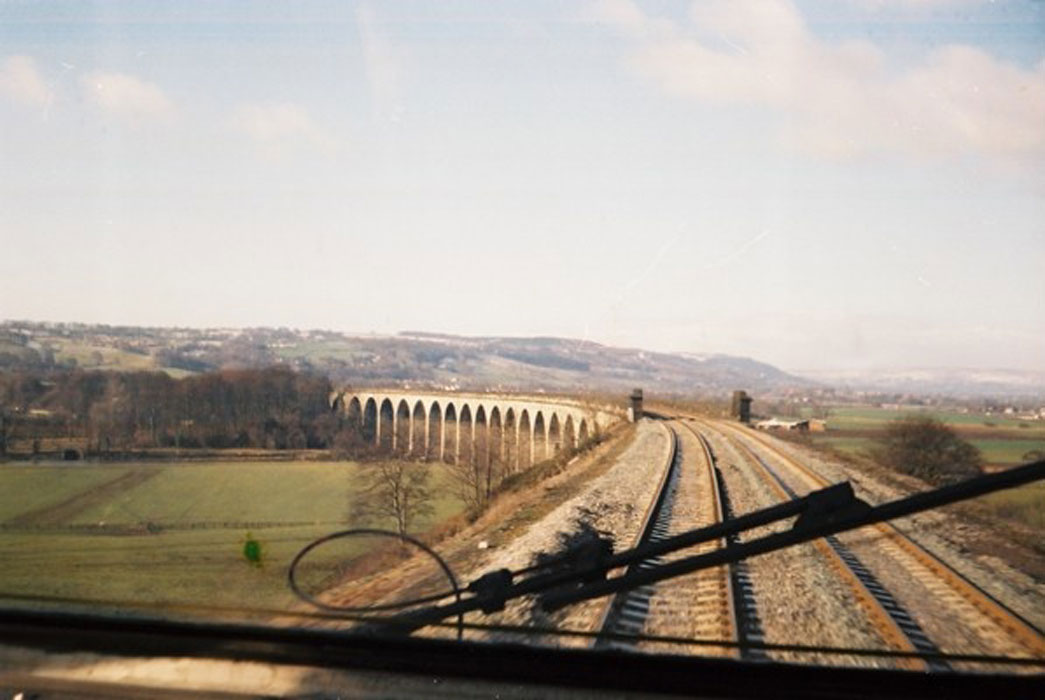
Viaduct (c1980) : Philip Hardaker Crimple
Viaduct (c1980) : Philip Hardaker
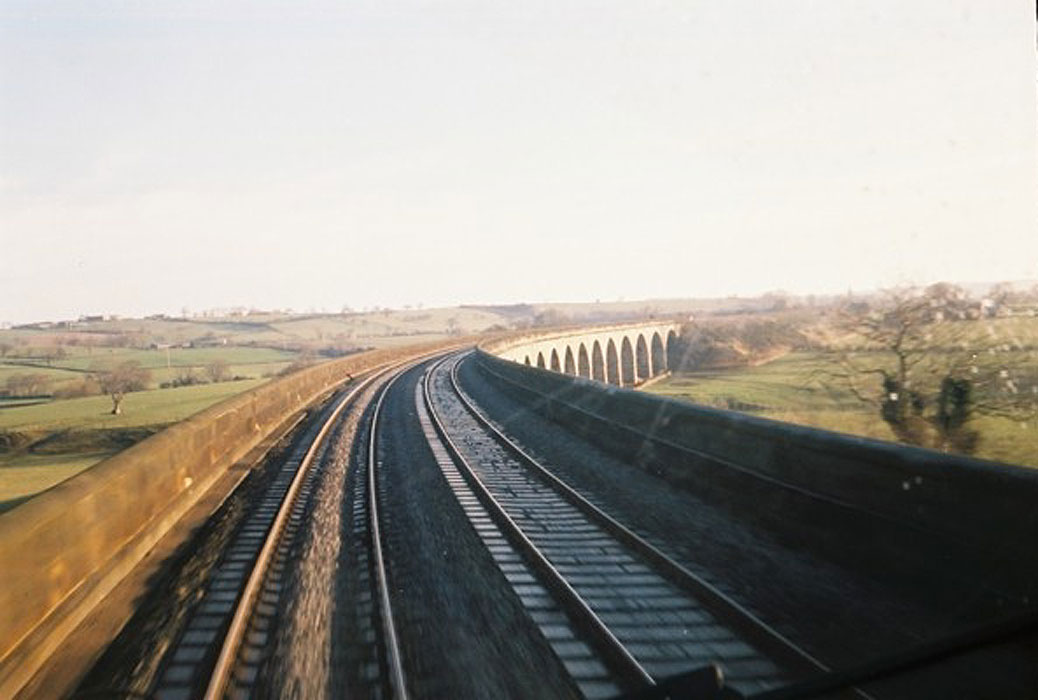
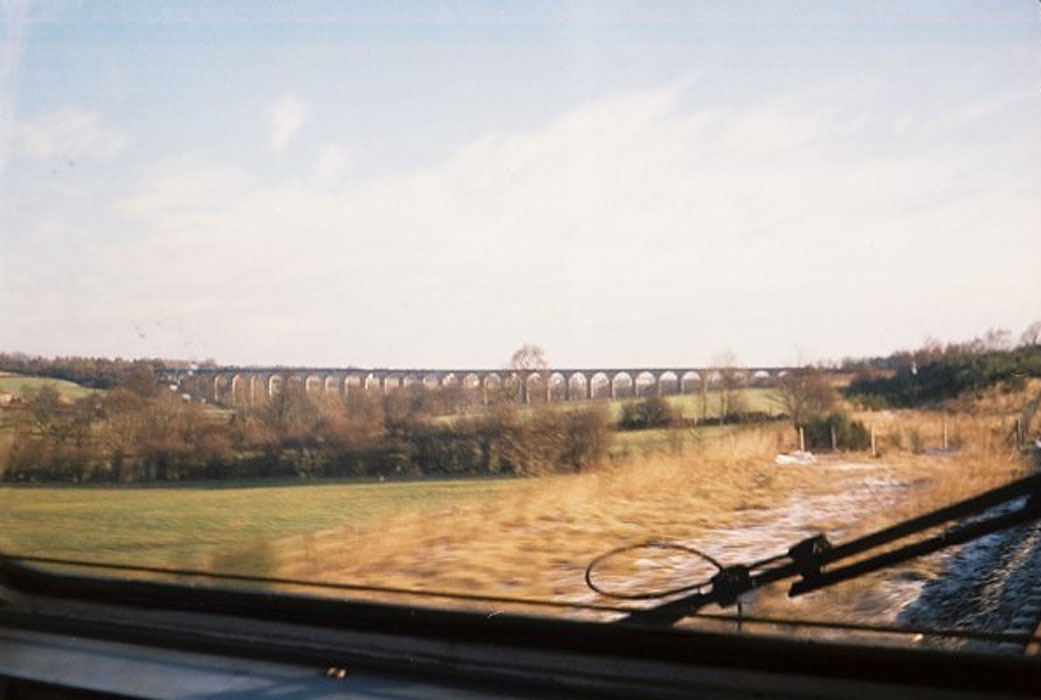
These shots are taken from the HST cab going empty early
morning to Harrogate approaching Crimple Viaduct.
First photo showing the viaduct which you can see from the cab as you
pass spacey houses on the approach to Harrogate. |
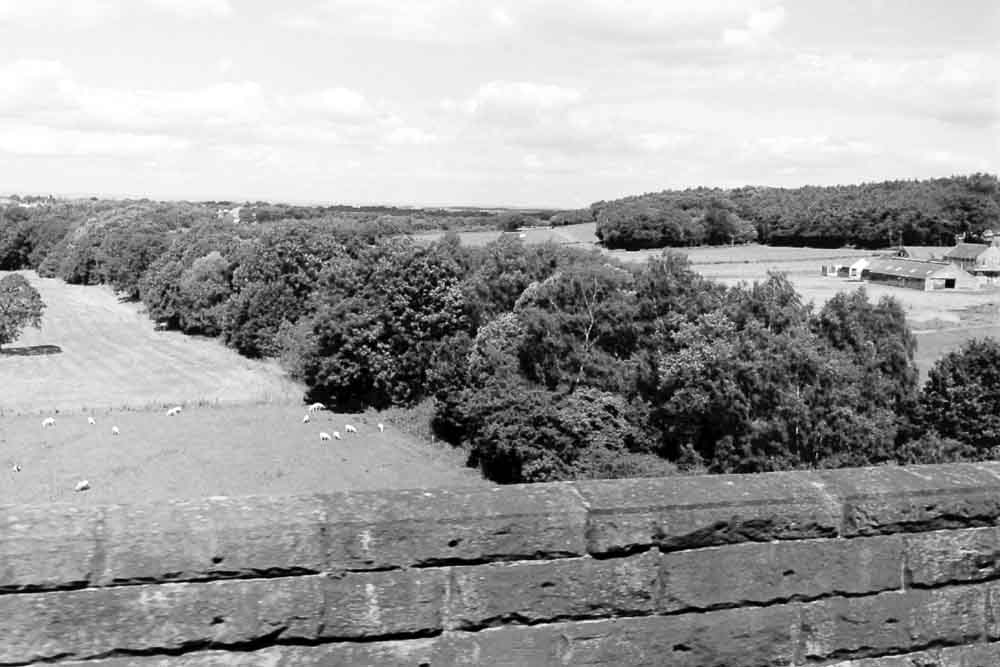
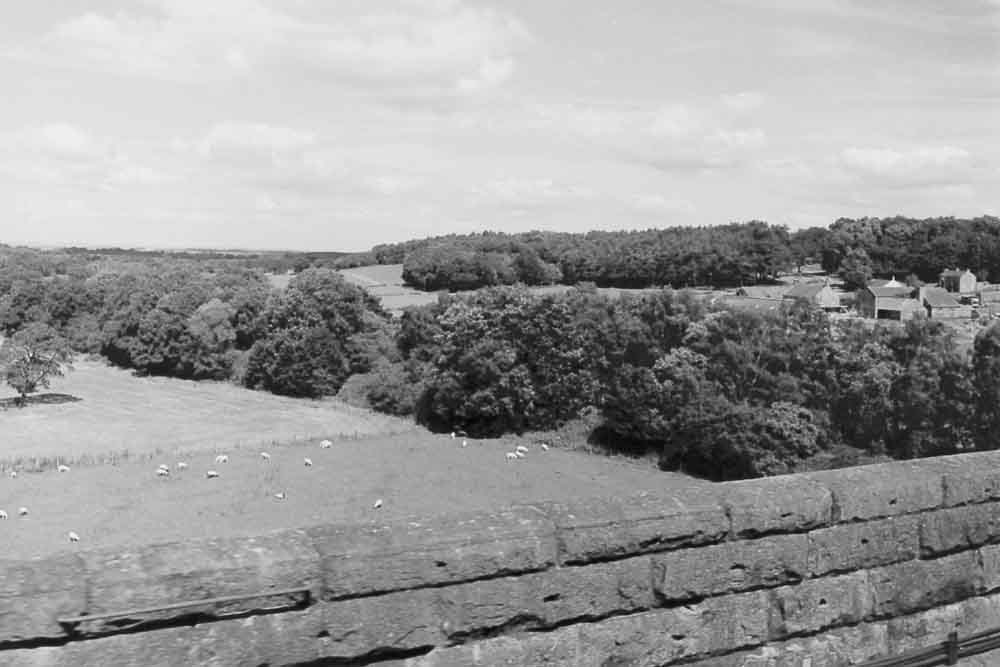
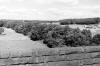 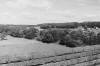 The
line to Crimple Low Viaduct
(21-07-14) : Malcolm Mallison The
line to Crimple Low Viaduct
(21-07-14) : Malcolm Mallison
In glorious monochrome (it was a Tri-X in OM-1 sort
of day).
The line to Crimple Low Viaduct, looking eastward from the High Viaduct.
Photos taken from a moving train.
http://www.britainfromabove.org.uk/image/eaw027389 |
 Harrogate
& Starbeck Harrogate
& Starbeck
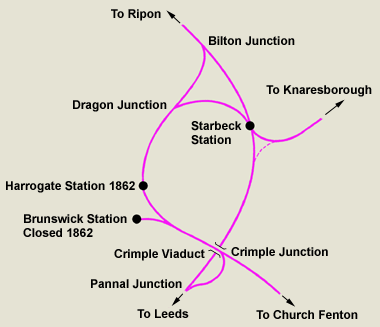
The route from Starbeck to Rippon & Northallerton,
including the Dragon junction section,
were closed in 1967.
The original 1848 Leeds & thirsk line between Pannal Junction & Starbeck
was closed on
7 October 1951.
The later 1862 section between Pannal Junction & Starbeck taking in
Harrogate & including
the tight curve over Crimple viaduct is the one still in use today.
Pannal Junction to Starbeck (Disused)
Pannal Junction to Starbeck : David Taylor
In 1859 a spur was built from the L&TR at Pannal Junction up to the Y&NMR
at Crimple Junction, between Prospect Tunnel and Crimple Viaduct, giving
Leeds trains a direct line in to Harrogate centre. A spur was built
northwards from Harrogate Station to re-join the L&TR at Bilton
Junction. The original L&TR line from Pannal Junction to Starbeck was
closed in 1951. (As kids in the days before Health & Safety madness we
used to play on the viaduct, although it was surrounded by farmland not
then a golf course.)
Pannal Junction to Starbeck : John Melbourne
The disused viaduct is
at the bottom of the showground (or more accurately the field next to
the showground used as a carpark during the Great Yorkshire Show); most
of it is surrounded by trees. The field has been used as a car park for
40+ years and was never a Golf course,
nor to my memory farmland.
In contrast, there is a Golf course in Pannal next to the existing
line, which runs adjacent to it in a cutting as it climbs the hill,
before turning sharp left onto the viaduct crossing the disused original
route (some way short of the disused viaduct), followed by the stream
and then over a field (Fulwith Mill Farm AFAIK).
This is some
distance north-east from the golf course. Of the two viaducts this is
much closer - the Golf course is visible from here which it certainly
isn't from the disused viaduct. I wonder if this is the viaduct the
writer (David Taylor) played/trespassed on?
|


/Headingley.jpg)
/Horsforth.jpg)